Searching for tuition fee loan vs maintenance loan, or wondering how much will I get from Student Finance England, usually means two linked questions: what each loan pays for, and how much living-cost support you might receive for academic year 2026 to 2027.
This compare-style FAQ explains the difference for UK home students in England — what a Tuition Fee Loan covers, what a Maintenance Loan covers, who is paid, whether household income is assessed, and how repayment works on both. For living-cost maxima and income bands, use our companion guide on how much Maintenance Loan you could get. Related: first payment and instalments, interest rates, when repayments start, part-time SFE, Special Support Element, and Universal Credit and student finance. Light mature context: university for mature students.
Not sure whether SFE is the right door yet? Start with a free 2-minute check: check if you qualify for Student Finance England.
This article is general information for UK home students exploring Student Finance England. It is not advice from Student Finance England, the Student Loans Company, or the Department for Education. Your eligibility, household income, course, living arrangements and start date decide what you get — always verify on GOV.UK and your Notification of Entitlement. Figures below are from official GOV.UK guidance for academic year 2026 to 2027 and may change. AF Education is not SFE or SLC.
Important: AF Education helps UK home students with the SFE and funded undergraduate / foundation-year application path. We cannot decide loan amounts, override an SLC calculation, or replace GOV.UK guidance. This service is not for international students.
Quick answer: tuition vs maintenance at a glance
For most new full-time undergraduates in England on a standard funded course in 2026 to 2027:
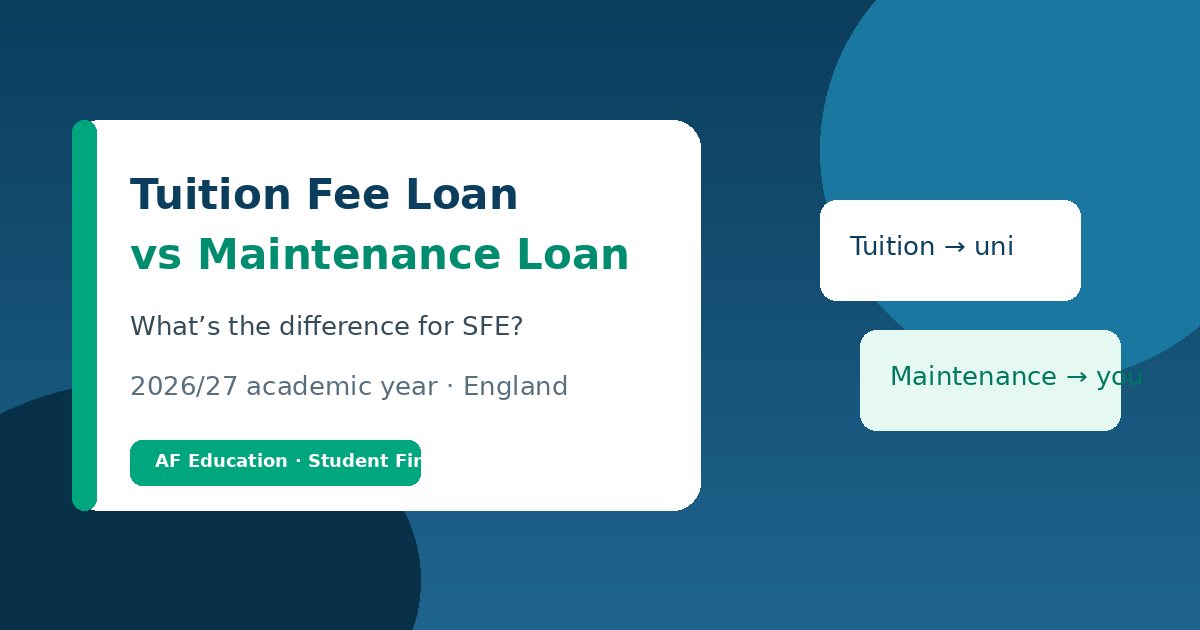
- Tuition Fee Loan — helps pay your course fees. Paid directly to your university or college. For a standard full-time course the maximum is up to £9,790 (was £9,535 in 2025/26). Accelerated degrees can go up to £11,750. The fee loan itself is not household-income assessed in the usual full-time undergraduate package.
- Maintenance Loan — helps with living costs (rent, food, travel, materials). Paid to your bank account in termly instalments. Amount is income-assessed for most students. Maxima (not benefits-eligible table) include up to £9,118 living with parents, £10,830 away outside London, and £14,135 away in London.
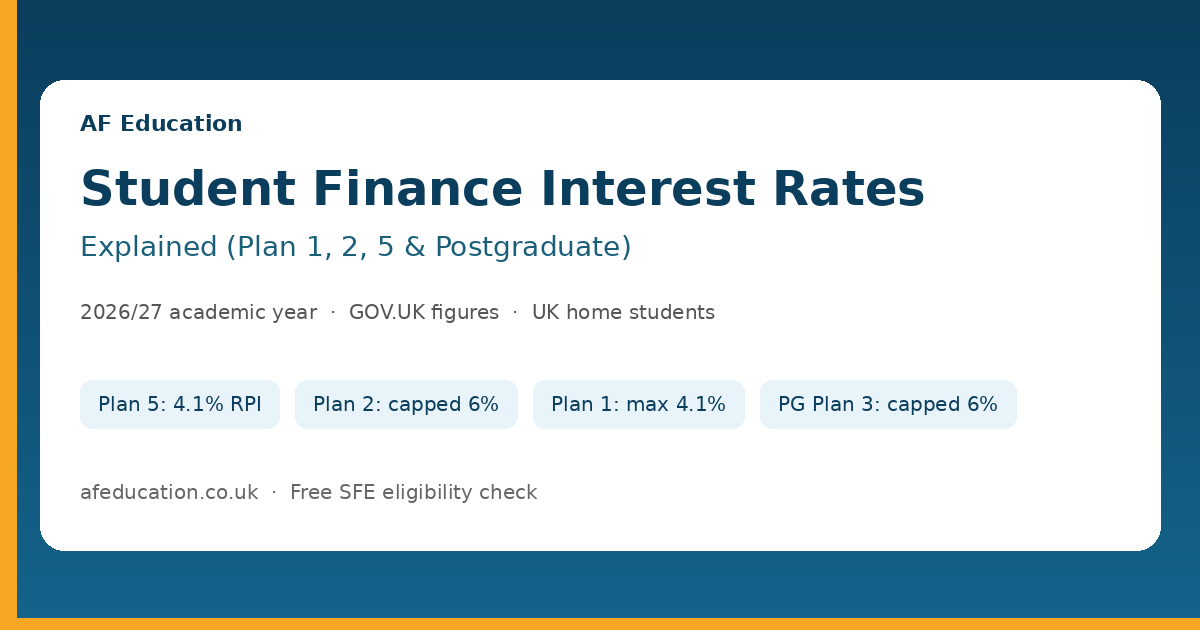
- Repayment — both loans usually sit on the same student loan plan and share the same repayment rules for that plan. Interest and thresholds depend on plan type — see our interest rates guide and when repayments start.
Sources: GOV.UK student finance for new full-time students and GOV.UK support with living and other costs 2026 to 2027.
Tip: This page is the compare guide (what each loan is for, who is paid, income assessment). For pound-by-pound living-cost maxima, minima and household-income detail, open how much Maintenance Loan — that sibling page owns the amount deep-dive.
What is a Tuition Fee Loan?
A Tuition Fee Loan is borrowed support toward tuition fees on a designated course. For eligible full-time new students in England in 2026/27, the standard maximum is up to £9,790. Accelerated degrees can go up to £11,750. Foundation-year fee loan caps differ by subject — classroom-based up to £5,760; partly practical up to £9,790 for 2026/27. Match your course to the live GOV.UK table.
Key point for the tuition fee loan vs maintenance loan comparison: the Tuition Fee Loan is paid straight to the provider. You do not receive that money in your personal account, and for the standard full-time undergraduate fee loan package it is not means-tested against household income in the same way as living costs.
What is a Maintenance Loan — and how much will I get?
A Maintenance Loan is the living-costs side of Student Finance England. It is paid to you, normally in three termly instalments after attendance is confirmed — rent, food, travel and day-to-day costs, not tuition. That is where “how much will I get” usually lands.
For full-time students not on the benefits-eligible higher table in 2026/27, GOV.UK maxima (with published minima in brackets) include:
- Living with parents — up to £9,118 (min £4,013)
- Away from parents, outside London — up to £10,830 (min £5,048)
- Away from parents, in London — up to £14,135 (min £7,039)
- Year abroad as part of a UK course — up to £12,403 (min £5,996)
- Aged 60+ on the first day of the first academic year — up to £4,582
Unlike the fee loan, the Maintenance Loan is income-assessed for most students. Lower residual household income usually means a higher loan up to the published maximum; higher income tapers you toward the minimum. From 2026/27, care leavers meeting the statutory definition can choose the maximum without household income being used for the Maintenance Loan calculation (SLC may still use income for other funding checks — confirm on GOV.UK). Benefits-eligible students can access higher maxima (for example about £10,757 at home, £12,345 away outside London, £15,415 in London) — see Special Support Element and Universal Credit and student finance.
Reassurance: Want the full “how much will I get” breakdown with income bands and calculator links? Use how much Maintenance Loan for Student Finance England. This page stays on the tuition-versus-maintenance distinction so you do not mix fee money with living-cost money.
Side-by-side: who is paid, income assessment, and repayment
Use this comparison when deciding what to budget for:
- Purpose — Tuition Fee Loan = course fees. Maintenance Loan = living costs.
- Who receives the money — Fee loan → university/college. Maintenance Loan → your bank account.
- Income assessment — Fee loan (standard full-time undergrad package) not household-income assessed for the fee loan itself. Maintenance Loan usually is income-assessed (with care-leaver and benefits exceptions above).
- Timing — Fee loan aligns with provider billing. Maintenance Loan arrives in termly instalments — see first payment and instalments.
- Repayment — Both typically repay under the same plan rules after you leave and earn above the threshold. Interest can still accrue while you study — see interest rates and when repayments start.
Part-time routes have different fee and living-cost rules — read part-time Student Finance England before assuming full-time figures apply.
Foundation years, mature students and the LLE tip
An integrated foundation year on a designated undergraduate course can normally attract undergraduate SFE — including a Tuition Fee Loan (subject to foundation fee caps) and a Maintenance Loan where eligible. Standalone access courses generally do not. Age alone does not remove the fee loan; living-cost rules (independence and the 60+ rate) sit mainly on the Maintenance Loan side. For the wider mature funded path see university for mature students lightly — this URL stays the compare guide, not a mature-finance pillar.
Looking ahead: the Lifelong Learning Entitlement (LLE) changes how some courses starting on or after 1 January 2027 are funded. Confirm on GOV.UK Lifelong Learning Entitlement overview. This article stays on the current SFE tuition fee loan vs maintenance loan distinction for typical England undergraduate and foundation paths AF Education helps with.
How to apply (and what AF Education helps with)
Once you know the course and start date, apply via Student Finance England — see how to apply for student finance step by step. Use the free eligibility checker first if you are unsure whether SFE applies.
AF Education — trading name of AF EDUCATION LONDON LTD (Companies House 08750757) — 47 Cavell Street, London E1 2BP · 020 7377 8844 · info@afeducation.co.uk. Free help for UK home students with SFE and funded undergraduate / foundation-year applications. We do not set loan amounts, guarantee outcomes, or replace GOV.UK or SLC decisions.
Tip: When you receive your Notification of Entitlement, check the fee loan and Maintenance Loan lines separately. Mixing them is the most common budgeting mistake — one pays the university; the other pays your rent and food.
Frequently asked questions
What is the difference between a Tuition Fee Loan and a Maintenance Loan?
A Tuition Fee Loan helps pay course fees and is paid to your university or college. A Maintenance Loan helps with living costs and is paid to your bank account in termly instalments. For standard full-time undergraduates in England, the fee loan is not household-income assessed; the Maintenance Loan usually is.
How much Maintenance Loan will I get in 2026/27?
It depends on where you live and household income. GOV.UK maxima (not benefits-eligible) include up to £9,118 at home, £10,830 away outside London and £14,135 in London. Full detail: how much Maintenance Loan.
How much is the Tuition Fee Loan for 2026/27?
Standard full-time maximum is up to £9,790 for 2026/27. Accelerated degrees up to £11,750. Foundation-year caps differ by subject (e.g. classroom-based up to £5,760; partly practical up to £9,790). Confirm on GOV.UK.
Is the Tuition Fee Loan means-tested?
For the usual full-time undergraduate fee loan package in England, the Tuition Fee Loan itself is not household-income assessed. Living-cost (Maintenance Loan) support is the part that is typically income-assessed.
Do both loans have to be repaid?
Yes — both are loans. They usually sit on the same plan and share that plan’s repayment rules. You repay when you earn above the threshold. See our interest and repayment guides for timings and rates.
When is the Maintenance Loan paid?
Usually in three termly instalments to your bank account after your university or college confirms attendance. Timing details are in when is the first student finance payment.
Can I get both loans on a foundation year?
An integrated foundation year on a designated undergraduate course can normally attract undergraduate SFE (fee loan subject to foundation caps, plus Maintenance Loan where eligible). Standalone access courses generally do not. Confirm on GOV.UK.
What’s the first step if I am still deciding about funding?
Run the free eligibility checker, note likely living arrangements for Maintenance Loan estimates, then apply via GOV.UK. AF Education helps UK home students with funded-course choice and the SFE path for free — only SFE/SLC confirm amounts on your entitlement.
Next steps
Takeaway: one loan pays the provider for fees (up to £9,790 standard full-time in 2026/27); the other pays you for living costs on an income-assessed basis. Use this page for the distinction; use how much Maintenance Loan for living-cost numbers; lock personal figures to GOV.UK and your Notification of Entitlement.
For free help with eligibility and applications:
Prefer to talk? AF Education on 020 7377 8844 or info@afeducation.co.uk — free help for UK home students with funded courses and SFE applications while you confirm figures on GOV.UK.